Leads and quotes
Agree how an enquiry is recorded, qualified and followed up, then how a quote becomes work for the delivery team.
Customer details, quotes and tasks for following up enquiries should be easy to connect. We help businesses in Belfast and across Northern Ireland plan bespoke customer relationship management (CRM) software around the way their team works. We assess existing CRM software and integration options before recommending a custom build.
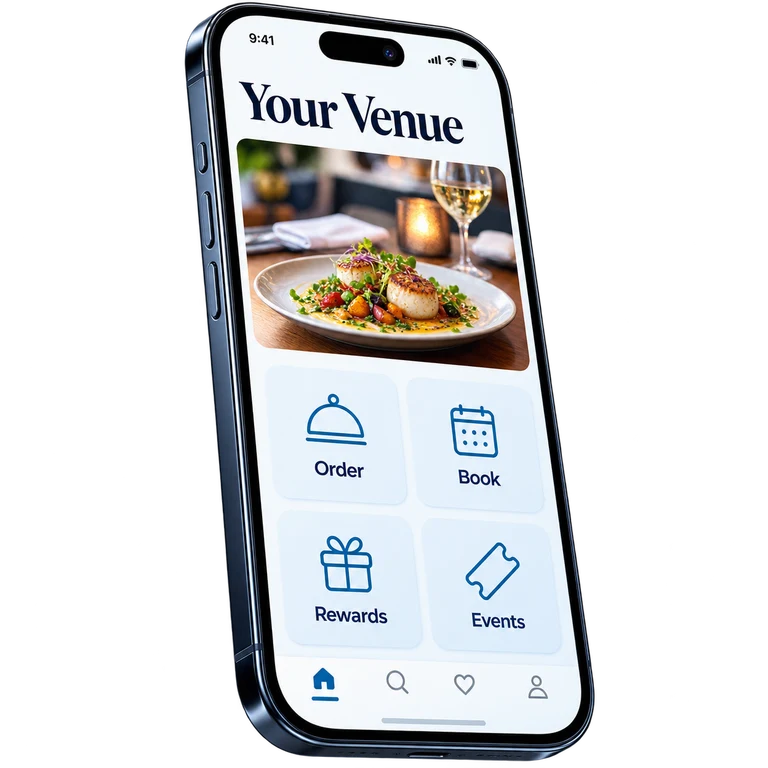

Your business. Your way of working.
Choose a business type, explore each view and try the controls. These fictional examples show possibilities to discuss, rather than a finished product or client results.
A sample retail & wholesale business, all in one place.
Across seven sample days
In this sample week
In this sample week
Revenue divided by volume
Every customer conversation, connected.
Open queries
8Sample support queueFirst response
2 hours 15 minutesFictional period averageCustomer feedback
4.7 / 5Illustrative scoreSTART WITH THE WORK
A bespoke CRM is customer relationship management software shaped around a particular business workflow. It can bring customer records, conversations, quotes, tasks and handovers together where those requirements justify custom development. Start with the work between an enquiry arriving and a job being handed over. Where is information copied? Who owns the next action? What gets lost when someone is away? Those answers make a better brief than a list of software features.
Agree how an enquiry is recorded, qualified and followed up, then how a quote becomes work for the delivery team.
Identify the details, notes and activity people need together, with responsibility for keeping records current.
Define reminders, ownership and views that help the team act. Build reports around decisions rather than figures nobody uses.
BUILD OR CONFIGURE?
If an existing CRM or a simpler configuration solves the problem, that belongs in the conversation. Custom development becomes worth considering when the workflow, connections or internal requirements cannot sensibly be met that way. We compare the requirements and compromises before recommending a build. A familiar spreadsheet does not automatically need replacing.
Identify useful software and the information it holds. Replacing every system is rarely the starting requirement.
Include configuration, development, subscriptions, integrations, migration and support over an agreed period.
Ask the supplier of an existing CRM to demonstrate the essential workflow. Record what can be configured, what needs an integration and what would require custom software, then compare those routes before choosing.
POSSIBLE STARTING POINTS
These are examples of requirements to explore, not claims about completed Podium projects. The scope depends on your team, customers and existing systems.
Consider trade enquiries, account activity and the handover between customer conversations and order management.
Explore how enquiries are assessed, how quotes are followed up, how appointments are managed and what information the team needs when work begins.
Discuss relationship history and coordination across teams, checking what existing specialist software should continue to handle.

CONNECTIONS AND ACCESS
An integration needs more detail than two product names. We check available connection options, the records exchanged, the direction of updates and how errors will be handled. Compatibility, permissions and access restrictions set by other providers need review before a connection is promised.
Agree which people can view, create, change or export information. Check access against actual responsibilities.
Review existing files, identify duplicates and missing fields, and agree what moves. Confirm who checks imported records and what history remains elsewhere.
Name the source of each important record. Avoid building a second stock, accounting or booking system by accident.
A PHASED BUILD
Our custom development approach uses small, priced stages. Agree the essential workflow, build a usable first stage and review it with the people doing the work. Plan later functionality around what is learned. Before launch, agree the checks, migration steps and how work continues during the change.
Agree the users, records, pipeline stages and handover included. Write down the checks that will show whether the essential workflow works, and what remains in existing systems.
The demonstration on this page is illustrative and all its data is fictional. It is not a live customer system or case study. Its screens show possible ideas, not a promised scope.
Identify who approves the system, who manages access and what guidance the team needs. Agree how issues and change requests will be reported.
OWNERSHIP AND SUPPORT
The agreement should state ownership, source access, documentation, account control and handover arrangements. Services and licences from other providers may have their own terms. Confirm what is supplied and what can be transferred rather than assume every part has the same ownership position. Hosting, maintenance and improvements need a clear scope too. Ongoing costs depend on the system and services it uses; custom development does not remove them.
Before we get started
An existing CRM product can be assessed for configuration and integrations. A custom CRM is developed around agreed requirements. Compare how each supports your work, the setup, migration, subscriptions, ownership and ongoing support before deciding which route is justified.
It depends on workflows, users, data, integrations and support. We scope and price stages, with subscriptions from other providers and ongoing responsibilities identified separately.
We can review the problem and available integration or configuration options. Possibilities depend on the platform and access. Replacement is not the default.
We inspect its structure and quality, then agree a mapping and checking process. Not every historic field necessarily belongs in the new system.
Roles and permissions can be scoped around the team. The proposal should describe the actual rules and how they will be checked.
No. We favour useful, priced stages. The first release needs a clear purpose and a plan for processes that remain elsewhere.
Our custom work can continue into support. Hosting, response expectations and the process for future improvements are agreed for the particular system.
Describe the current process, the systems involved and the handover your team wants to improve.
Discuss your custom CRM requirements