

The short answer
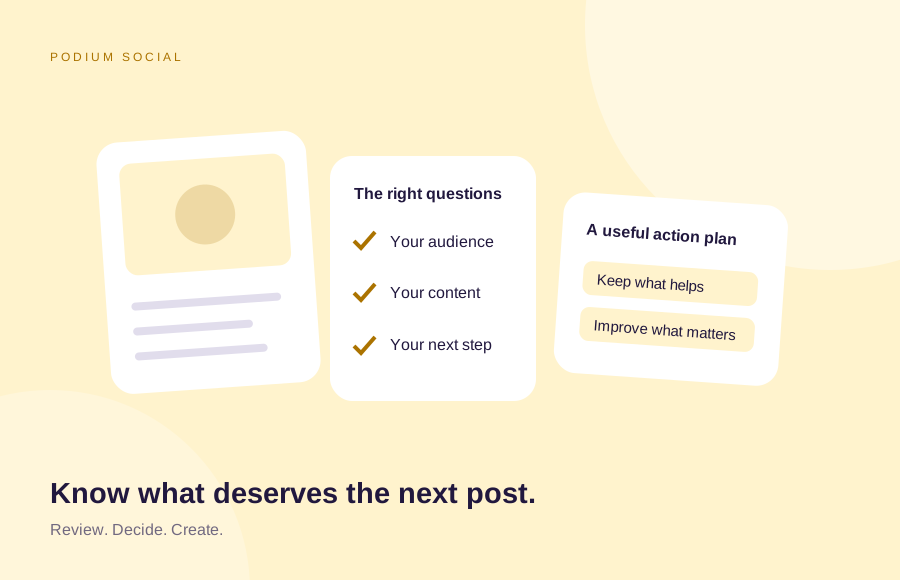
A social media audit is a structured review of your accounts, audience, content and results. Its purpose is to decide what to keep, improve or stop. For a small business, a useful audit connects the posts people see with the website pages, conversations and enquiries that follow, rather than reporting follower totals alone.
What to take from this guide
- Start with the business goal and a consistent review period.
- Separate reach, engagement, website activity and actual enquiries.
- Finish with a short action list that names an owner for each change.
1. Set a question the audit should answer
“Are our posts working?” is too broad to guide a decision. Ask something more specific: are potential customers finding the service, are product posts sending useful visits to the shop, or are people asking the same unanswered question? Choose the business outcome before collecting screenshots of charts.
Use a defined review period and note campaigns, holidays or closures that may affect the comparison. For a Belfast business targeting local customers, consider audience relevance and the locations you genuinely serve. Our social media service for Belfast businesses explains how channel work can be scoped around a business goal.
2. Check the accounts before the posts
List the profiles the business owns, including inactive or duplicate accounts. Confirm who can manage them, which contact information is public and where each website link goes. Look at the profile as a potential customer: the offer, location and next step should be understandable without reading a month of posts.
Check that linked landing pages still exist and fit the promise in the profile. Keep recovery details in the approved account-management process, not in a widely shared audit spreadsheet. Record access issues for an authorised administrator rather than trying to bypass account controls.
3. Compare content by its job, not just its format
Group posts by purpose: explaining a service, showing evidence, answering a question, introducing the team or promoting a specific offer. Then compare how similar posts performed within the same channel and period. A useful service explanation and a light-hearted team photo may be doing different jobs.
LinkedIn’s own analytics separates content, followers and visitors. Other platforms also use their own definitions and reporting windows, so do not combine numbers simply because each is labelled “views”. Keep paid and unpaid activity distinct and record the metric definitions used. Include useful comments and recurring questions in the review, not only numerical totals.
4. Follow the click through to the website
Open the link from a recent post on a phone. Does the page continue the same conversation, explain the offer and provide a working action? If the post promotes a particular service but lands on a vague homepage, the audit should identify that gap. Social content cannot resolve a broken contact form.
Campaign parameters can help distinguish tagged links in analytics. Use consistent names and check that tracking is configured appropriately; they do not identify every later sale or replace consent and privacy arrangements. If visits are arriving but contact is weak, use the website enquiry audit to investigate the next stage.
5. Produce a report that leads to decisions
A small business audit can be a concise working document. Include the observation, the evidence, the proposed action and the person responsible. Mark missing data as missing. Do not turn a period with very few clicks into a confident claim about what all customers prefer.
This table is an illustrative report structure, not a client result. Each action should answer a specific problem, so the next review can establish whether it helped.
| Observation | Evidence to record | Practical next step |
|---|---|---|
| The profile links to an outdated page | Destination address and screenshot | Update the link and test the mobile journey |
| Useful questions recur in comments | Anonymised themes and examples | Create a clear answer and link to the relevant service |
| Posts get attention but few suitable visits | Channel metrics and available website data | Review the audience, message and destination together |
| One channel takes more effort than it returns | Time spent and relevant outcomes | Reduce activity or test a different content approach |
6. Turn the findings into a manageable plan
Choose a small number of priorities instead of promising to change everything. Correct the profile links, answer a repeated question and improve the page behind the most relevant posts. Give each change an owner and review point. Leave room to respond to customers rather than filling every available publishing slot.
Our small business content calendar guide turns those priorities into a schedule. If the audit points to paid promotion, use the Belfast advertising budget guide before increasing spend. Podium Social can connect content, campaigns and the website journey within an agreed scope.
Common questions
How often should a small business do a social media audit?
Choose a rhythm that matches activity and decisions. A light monthly review may support an active content plan, with a fuller audit before a major campaign, account handover or change of direction. Treat urgent access or broken-link issues separately.
Is a social media audit just checking engagement?
No. It should also review account ownership, profile information, audience relevance, the purpose of content and what happens after a click or message. Engagement is one signal within that wider picture.
Do I need paid tools for a social media audit?
Not always. Platform analytics, available website reporting and a clear spreadsheet can provide a useful starting point. Check access and data gaps before buying a tool, and avoid assuming it can recover information you never collected.
Can an audit guarantee more sales?
An audit identifies evidence and priorities. Sales also depend on the offer, audience, website and follow-up, so the report should propose changes to test rather than promise a particular outcome.
Sources and further reading
Primary references used in this guide. Platform details and requirements should be checked again when scoping a project.
Prepared by the Podium team. Illustrative examples are not client results.